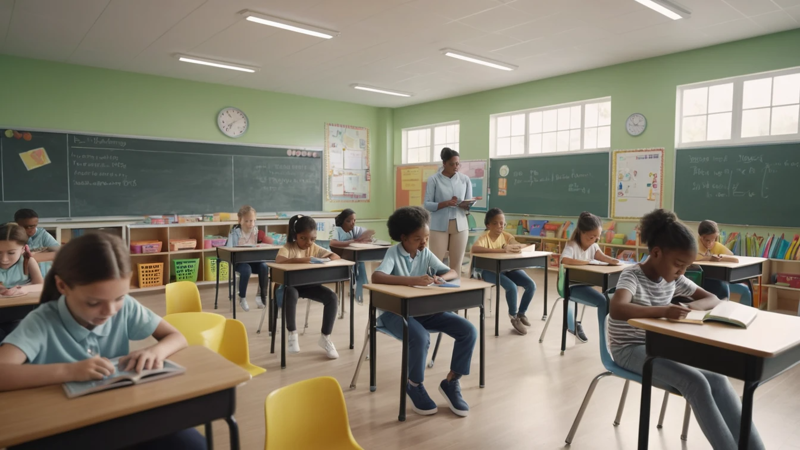
How to differentiate instruction in classroom effectively with simple strategies that boost student engagement and learning outcomes.
How to differentiate instruction in classroom? Differentiated instruction means adjusting teaching methods, content, and activities to meet the diverse needs of students. Teachers use flexible strategies so every learner—regardless of ability—can understand, engage, and succeed.
How To Differentiate Instruction In Classroom 🎯
Ever feel like one lesson just doesn’t work for everyone in your class? You’re not alone. Every classroom has students with different abilities, learning styles, and interests. That’s exactly why differentiated instruction matters so much.
Differentiating instruction isn’t about creating 30 different lesson plans. It’s about being smart and flexible with how you teach. When done right, it helps every student feel seen, supported, and capable. Let’s break it down step by step.
What Is Differentiated Instruction? 📚
Differentiated instruction is a teaching approach where lessons are tailored to meet the needs of all students. Instead of using a one-size-fits-all method, teachers adapt how they teach based on student readiness, interests, and learning styles.
This method focuses on making learning accessible. Some students may need more support, while others may need a challenge. Differentiation ensures both groups stay engaged and grow academically.
At its core, this approach respects that every student learns differently. It creates a more inclusive and effective classroom environment.
Why Differentiation Matters In Today’s Classrooms 🌍
Classrooms today are more diverse than ever. Students come from different backgrounds, skill levels, and learning preferences. Teaching the same way to everyone often leaves some students behind.
Differentiated instruction helps close learning gaps. It allows struggling students to catch up while advanced learners continue to grow. This balance improves overall classroom performance.
When students feel understood, they are more motivated. And motivation leads to better outcomes, both academically and emotionally.
Key Principles Of Differentiated Instruction 🔑
Understanding the principles behind differentiation makes it easier to apply. These principles guide teachers in creating meaningful learning experiences.
Here are the core ideas:
- Student-centered learning
- Flexible teaching methods
- Ongoing assessment
- Respect for individual differences
Each principle works together to create a classroom where students can thrive. It’s not about perfection—it’s about progress.
Types Of Differentiated Instruction 🧩
Differentiation can happen in several ways. Teachers can adjust what students learn, how they learn, or how they show their understanding.
Here’s a simple breakdown:
| Type | Description | Example |
| Content | What students learn | Different reading levels |
| Process | How students learn | Group work vs. solo tasks |
| Product | How students show learning | Essay, video, or presentation |
| Environment | Classroom setting | Quiet corner or group area |
Using a mix of these types helps reach more students effectively.
How To Assess Student Needs First 📝
Before you differentiate, you need to understand your students. This step is critical and often overlooked.
Start with simple assessments. These can include quizzes, observations, or even casual conversations. The goal is to identify strengths, weaknesses, and preferences.
Once you have this information, you can group students or plan activities that match their needs. Assessment should be ongoing, not just a one-time task.
Grouping Students Effectively 👥
Flexible grouping is a powerful differentiation tool. It allows students to work in different groups based on the task or skill level.
You can group students in several ways:
- By skill level
- By interest
- Randomly for collaboration
- Based on learning style
The key is flexibility. Groups should change often to avoid labeling students or limiting growth.
Adapting Content For Different Learners 📖
Not all students can handle the same material in the same way. That’s where content differentiation comes in.
You can adjust content by:
- Using simplified texts for struggling readers
- Providing advanced materials for high achievers
- Offering audio or visual content
This approach ensures that every student can access the lesson. It removes barriers and builds confidence.
Modifying Teaching Methods 🧠
How you teach matters just as much as what you teach. Some students learn best through visuals, while others prefer hands-on activities.
Try mixing different methods:
- Visual learning (charts, videos)
- Auditory learning (discussions, lectures)
- Kinesthetic learning (hands-on tasks)
Using varied methods keeps lessons engaging and effective for everyone.
Offering Multiple Learning Activities 🎨
Giving students choices can boost engagement. Not every student enjoys the same type of activity.
Here are some options:
- Create a poster
- Write an essay
- Record a video
- Build a model
When students choose how they learn, they feel more involved. This increases motivation and creativity.
Differentiating Assessment Methods 📊
Assessment doesn’t have to mean tests only. Students can show their understanding in many ways.
| Assessment Type | Purpose | Example |
| Formative | Ongoing feedback | Exit tickets |
| Summative | Final evaluation | Tests |
| Performance | Skill demonstration | Presentations |
| Self-assessment | Reflection | Journals |
Using varied assessments gives a clearer picture of student learning.
Using Technology To Support Differentiation 💻
Technology can make differentiation easier. It offers tools that adapt to individual student needs.
Examples include:
- Learning apps with adjustable difficulty
- Online quizzes with instant feedback
- Educational videos
Technology allows students to learn at their own pace. It also frees up time for teachers to focus on support.
Managing Time And Planning Efficiently ⏳
One common concern is time. Differentiation can seem overwhelming at first.
Start small. You don’t need to change everything at once. Focus on one subject or strategy and build from there.
Planning ahead helps a lot. Reuse materials and adjust them instead of creating new ones every time.
Common Challenges And How To Overcome Them 🚧
Differentiation isn’t always easy. Teachers often face challenges like limited time or large class sizes.
Here’s how to handle them:
- Time constraints: Use simple strategies first
- Large classes: Use group work
- Limited resources: Get creative with materials
Remember, progress matters more than perfection.
Real-Life Classroom Strategies That Work 💡
Sometimes, practical ideas make the biggest difference. Here are proven strategies teachers love:
- Tiered assignments – Same topic, different difficulty levels
- Learning stations – Rotate through activities
- Choice boards – Students pick tasks
- Think-pair-share – Encourages collaboration
These strategies are easy to implement and highly effective.
Supporting Advanced And Struggling Students ⚖️
A balanced classroom supports both ends of the spectrum. Advanced students need challenges, while struggling students need support.
For advanced learners:
- Offer extension activities
- Encourage independent projects
For struggling students:
- Provide extra guidance
- Break tasks into smaller steps
This balance ensures no student is left behind.
Creating An Inclusive Classroom Environment 🌈
An inclusive classroom is key to successful differentiation. Students should feel safe, respected, and valued.
You can build this environment by:
- Encouraging participation
- Respecting differences
- Promoting teamwork
When students feel comfortable, they are more open to learning.
Tracking Progress And Adjusting Strategies 📈
Differentiation is not a one-time effort. It requires constant monitoring and adjustment.
| Strategy | What To Track | Action |
| Group work | Participation | Adjust groups |
| Assignments | Completion rate | Modify difficulty |
| Assessments | Scores | Provide support |
Tracking progress helps you refine your teaching and improve results.
Conclusion 🎯
Differentiating instruction in the classroom is one of the most powerful ways to support student success. It ensures that every learner, regardless of ability, gets the opportunity to grow and thrive.
By adjusting content, teaching methods, and assessments, teachers can create a more engaging and inclusive environment. Start small, stay flexible, and keep learning. Over time, these strategies will transform your classroom into a place where every student succeeds.
FAQs ❓
How to differentiate instruction for mixed ability classrooms?
Start by assessing student levels and grouping them flexibly. Use tiered assignments to meet different needs. Provide varied learning materials for better understanding.
What are simple differentiation strategies for teachers?
Use group work, choice boards, and varied teaching methods. Offer different levels of tasks. Keep strategies simple and manageable.
How do you differentiate instruction with limited time?
Focus on one strategy at a time. Use reusable materials and flexible grouping. Small changes can make a big impact.
Why is differentiated instruction important in schools?
It helps meet diverse student needs. It improves engagement and learning outcomes. It also builds confidence in students.
How can technology help differentiate instruction?
Technology offers personalized learning tools. Students can learn at their own pace. It also provides instant feedback for improvement.