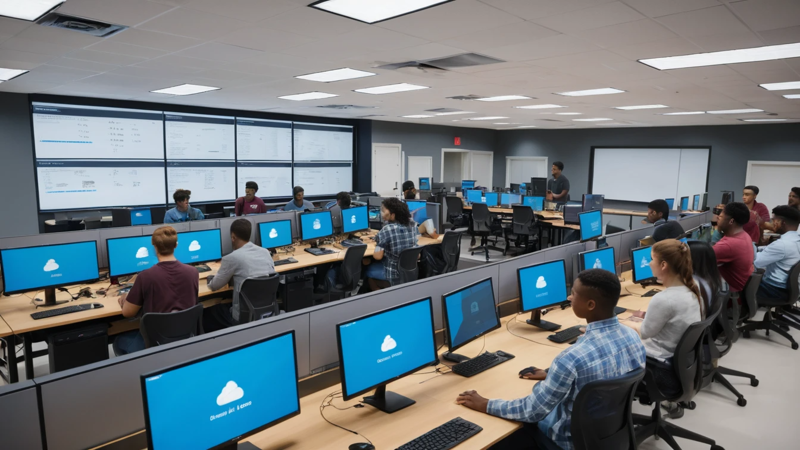
Why Choosing the Right IT School Matters for building real-world tech skills, confidence, and long-term career success in a fast-changing technology industry.
Why Choosing the Right IT School Matters for Your Future in Technology is about more than education—it’s about career readiness. The right IT school builds real-world skills, confidence, and adaptability through hands-on training, preparing students to succeed in fast-changing technology roles from day one.
Why Choosing the Right IT School Matters
Choosing the right IT school can completely change how your career in technology unfolds.
I learned this firsthand when I watched two friends start their tech journeys at the same time but end up in very different places.
One chose a program that focused only on theory, while the other enrolled in a hands-on technology training program with real labs and instructors who had worked in the field.
Within a year, one was still confused about certifications, and the other was confidently troubleshooting networks and applying for entry-level tech roles.
Technology moves fast, and education has to keep up.
A good learning environment should not just teach concepts but show how they apply in real workplaces.
When I sat in on a few classes while helping a colleague research programs, the difference was obvious.
Some classrooms felt disconnected from reality, while others mirrored real IT departments with simulations, labs, and problem-solving exercises.
That practical exposure makes learning stick and builds confidence early on.
If you want to understand how structured, career-focused learning works in real settings, exploring an IT school can provide valuable insight.
How Technology Education Builds Real Confidence
Many people enter tech because they like computers, but curiosity alone is not enough.
What builds confidence is knowing how systems behave when something breaks.
I remember helping a junior technician during a late-night server issue, and the reason they stayed calm was simple.
They had already dealt with similar scenarios during hands-on labs in their training program at an IT-focused learning institution.
That experience cannot be replaced by reading slides or watching videos.
Strong programs focus on applied learning, not memorization.
Students work with operating systems, networking hardware, cybersecurity tools, and cloud platforms.
They learn how to explain technical problems in plain language, which is a skill employers
value deeply.
This type of instruction prepares learners for real tickets, real users, and real pressure.
Why Practical Skills Matter More Than Theory Alone
Understanding concepts is important, but applying them is what makes someone job-ready.
I once watched a student diagnose a network outage using logic they had practiced repeatedly in lab environments.
They were not guessing or panicking.
They followed a process because that process had been reinforced through repetition and real-world scenarios.
Programs that prioritize hands-on experience teach students how to think, not just what to remember.
This mindset becomes essential in roles like technical support, systems administration, and network operations.
Employers look for people who can adapt when the unexpected happens.
That adaptability comes from experience, not memorization.
Learning Paths That Reflect Real Technology Careers
Technology careers are diverse, and education should reflect that reality.
Some learners gravitate toward networking, while others enjoy working with security tools or cloud infrastructure.
A strong technology program exposes students to multiple disciplines early on.
I have seen learners start with one goal and pivot once they discovered what they actually enjoyed doing day to day.
That discovery process prevents burnout and leads to more satisfying career choices.
It also helps learners align their skills with industry certifications and real job requirements.
When education mirrors real career paths, graduates enter the workforce with clarity instead of confusion.
The Role of Engagement in Long-Term Success
Fancy equipment does not guarantee effective learning.
Engagement is what truly makes the difference.
I once visited two campuses with similar resources, yet the student energy felt completely different.
In one classroom, students quietly followed instructions.
In another, they debated solutions, tested ideas, and helped each other troubleshoot.
That level of engagement builds confidence and problem-solving ability.
It also creates habits that carry over into professional environments.
Engaged learners ask better questions and learn faster on the job.
How Early Education Choices Shape Career Growth
The foundation built early in a tech career has long-lasting effects.
Professionals with strong fundamentals adapt more easily to new tools and systems.
I have worked alongside individuals who advanced quickly because their initial training emphasized how technology works at its core.
They were not limited by specific software or tools.
They understood systems well enough to learn anything new that came their way.
This flexibility opens doors to leadership roles and specialized positions later on.
Making a Smart Decision for Your Future in Tech
Choosing where to learn technology should be a deliberate decision.
Look for programs that balance instruction with real-world application.
Pay attention to how instructors teach and how students interact with the material.
Talk to graduates and ask how prepared they felt entering the workforce.
From years of observing different career paths, one thing is clear.
The right IT school does more than teach technical skills.
It builds confidence, critical thinking, and professional readiness.
Those qualities determine long-term success in an industry that never stops evolving.
❓ FAQs
Why does choosing the right IT school matter?
Choosing the right IT school shapes how well you handle real-world technology problems. It builds practical skills instead of just theory. This leads to stronger confidence and faster career growth.
How does an IT school affect tech career success?
An IT school influences how job-ready you are after graduation. Programs with labs and real scenarios prepare you for workplace challenges. This makes it easier to adapt and advance in tech roles.
What should I look for in an IT training program?
Look for hands-on labs, experienced instructors, and career-focused learning paths. The program should mirror real IT environments. Strong engagement and applied learning are key signs of quality.
Do hands-on IT programs help beginners succeed?
Yes, hands-on IT programs help beginners build confidence early. Practicing real scenarios reduces confusion when issues arise on the job. This makes learning stick and improves problem-solving skills.
Can the right IT education improve long-term growth?
The right IT education builds strong fundamentals that last for years. These basics help professionals adapt to new tools and technologies. That flexibility supports leadership and specialized career opportunities.